

What Scrapbooking Taught Me About Planning Travel (and Vice Versa)
I came to travel planning from two directions, and I’m not sure I could have done it from just one.
The first was twenty years in corporate America: sales, marketing leadership, strategic planning. I learned how to build a 14-step plan with contingencies for steps 6, 9, and 12 and learned how to anticipate where things might go sideways. I learned that the difference between a good plan and a great one is almost always the work nobody sees.
The second was memory keeping and scrapbooking, which sounds like a non-sequitur until you’ve actually made a scrapbook — something I’ve been doing for well over half of my lifetime. I’m not going to tell you I’m a minimalist about it. I am still, after all this time, the kind of scrapbooker who wants to use every embellishment in the kit, fit one more photo onto the page, and justify the cost of every supply on my craft table. The instincts I’m about to describe are ones I’m still actively working against in my own pages (and my own travels). Having the awareness doesn’t mean I’ve outgrown the pull; it means I know what to watch for. That awareness sharpens my eye when I’m planning yours.
I want to write about that second craft today, because the longer I do this work, the more I’m convinced that the instinct that makes a great scrapbook page is the same instinct that makes a great trip. They’re not similar crafts. They’re the same craft, in different materials.
Here are five things one taught me about the other.
1. A trip is a story.
The first thing a serious scrapbooker learns is that a scrapbook is not a photo album.
A photo album holds everything. Every picture from the trip, in roughly the order they were taken, with a date label (if you remember it). The result is a record. Comprehensive, honest, and almost completely unmemorable. You will not pull a photo album off the shelf six years later. Nobody does.
Record vs. Story
A scrapbook is the opposite. A photo album documents the trip. A scrapbook tells the story of it. And those are two completely different acts. One captures what happened; the other captures what it felt like, what it meant, what you want to remember about who you were when you were there. One is preservation. The other is an art of memory capture.
That distinction is everything. It’s why a scrapbook is, at heart, an act of editorial compression. You took 1,400 photos in Italy. The scrapbook of that trip will hold maybe 100 photos. The other 1,300, while most are perfectly nice, won’t appear. The page can’t hold them. More importantly, the story can’t hold them.
A trip is the same. The most common mistake I see in first-time-Europe planning is the same mistake first-time scrapbookers make: trying to include everything. The family that visits four countries in 10 days is making a photo album of their trip. The places exist; the dates are correct; the photographs prove they were there. But the story doesn’t hold. By Day 6 the cities blur. By Day 8 nobody can remember which morning was the cathedral and which was the museum. The trip is comprehensive, honest, and almost completely unmemorable.
The family that visits two countries in 10 days, or one country in seven, is making a scrapbook. They’ve left things out, entire cities and entire countries, and the trip is richer for it.
The Scrapbooker’s Instinct
The days have edges. The meals have shape. The kids can name what they did on Tuesday because Tuesday had room to be a real day instead of a transit segment.
When I sit down to craft an itinerary, that’s the work I’m actually doing. I’m not building a list of activities. I’m helping shape your vision into a story, one with a beginning, a middle, and an end you’ll tell for years. Most people come to a travel advisor wanting to be told yes to everything they’ve been thinking about. Half of what I’m actually doing is telling them no, and explaining why the trip will be better for it. That’s the scrapbooker’s instinct. The story comes first.
And the only way to shape a story I haven’t lived is to ask. This is why every client starts with a discovery call: a real conversation, not a sales call. I already know the destinations. I know the supplier ecosystems. Those are the easy parts of the job. The hard part — the part that determines whether the trip will actually land — is understanding you. What’s pulling you to this place? How do you want to feel when you wake up on day three? What does this trip mean in the season of life you’re actually living right now?
I want the WHY, not the WHAT.
Starting With Why
The WHAT — which countries, which hotels, which guides, which experiences — falls into place once I know the WHY. Most travel advisors lead with the WHAT: destination suggestions, supplier deals, escorted-tour comparisons, popular packages. Those things feel scripted because they are. They’re somebody else’s story, dressed up to fit you. I don’t promote suppliers and I don’t push deals. I work inside the ecosystem of suppliers I know, and I use that knowledge to build something else entirely: a custom travel story, yours.
2. Every day needs an anchor.
Open any scrapbook layout you love (your own, a friend’s, one from a magazine) and look at it for a moment.
It will have an anchor. One photo, one element, one moment that the rest of the page is composed around. Everything else on the page is in conversation with that anchor. The supporting photos. The journaling. The embellishments. The negative space. All of it exists to make the anchor land.
A page without an anchor is a collage. A page with an anchor is a story.
The same is true of a day on a trip. A day with no anchor is a list of activities. A day with an anchor is a memory. The anchor doesn’t have to be the most expensive thing or the most famous landmark; it usually isn’t. It might be the moment your 11-year-old realized she could read the train schedule in French, or the dinner at a tiny bistro your guide reserved for you the day before. It might be the first walk outside the hotel, when your family genuinely realized they were in another country.
When I design a 10-day itinerary, the very first thing I do is plot the Memory Anchors: one for each day. The supporting activities, the timing, the meals, even the rest periods are all in conversation with those anchors. Everything else exists to make the anchor land.
I learned that from scrapbooking before I ever applied it to travel. Once you’ve spent enough hours composing a page around a single photograph, you start to see days the same way.
3. Negative space is anything but negative.
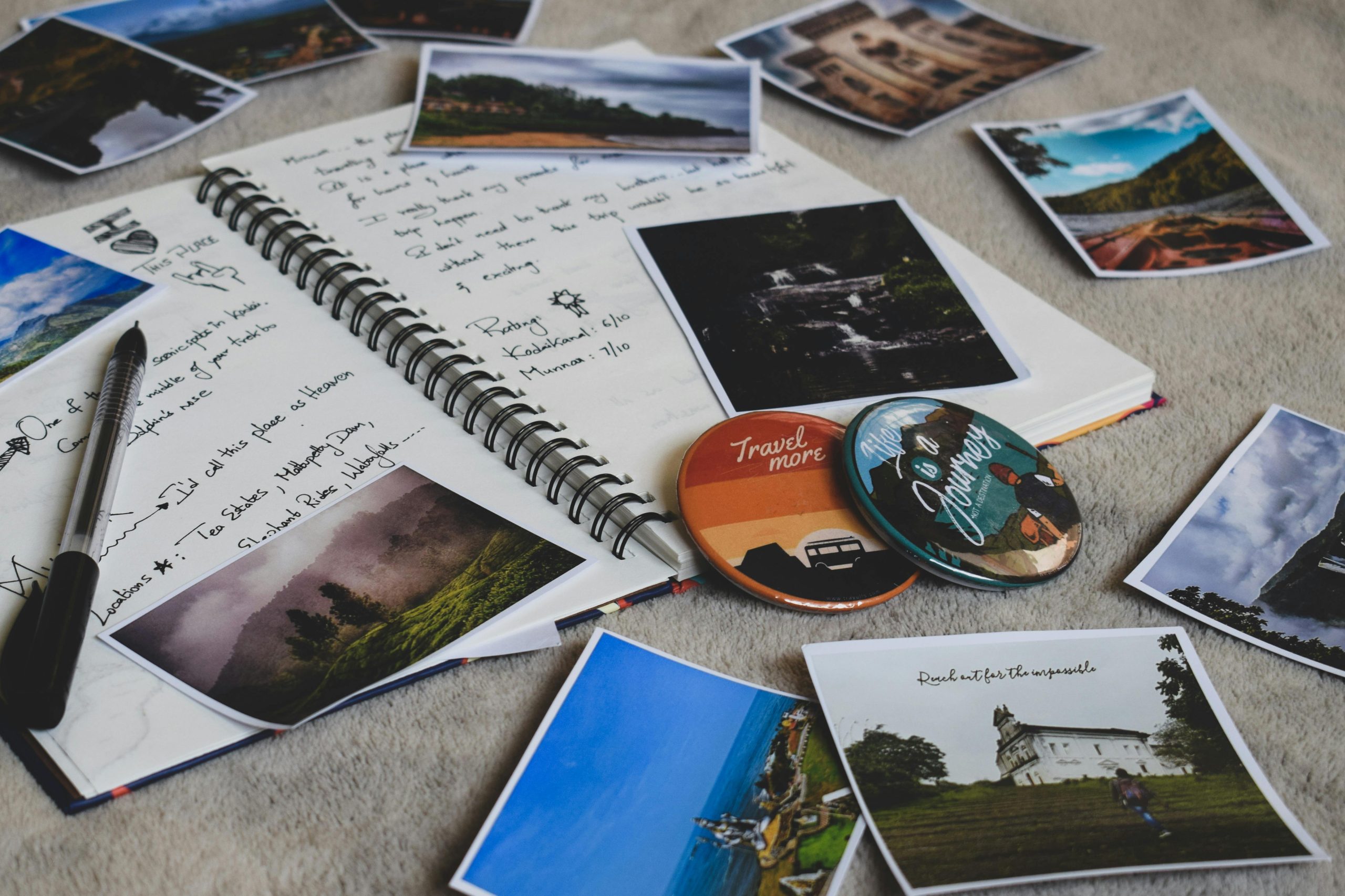
This is the one I had to learn the hardest. Beginning scrapbookers fill every inch of the page. There’s a logic to it: you paid for the cardstock, the embellishments, the stickers, the patterned paper. Why leave any of it empty? But a page filled to the edges feels chaotic in a way you can sense before you can name. The eye has nowhere to rest. The anchor has no room to breathe. The story doesn’t land.
I’ll be honest: this isn’t only a beginner’s mistake. After more than two decades of scrapbooking I still feel the impulse on every page. The expensive die-cut NEEDS to go somewhere. The leftover photos MUST go somewhere. My craft-table math wants every supply justified. Leaving space empty, on purpose, costs something, and not just psychologically. It feels like waste.
Negative Space Is a Design Element
It isn’t waste. Negative space — the parts of the scrapbook page you deliberately leave empty — isn’t absence. It’s a design element. It’s the thing that makes the rest of the page work.
A trip works the same way. The unscheduled hour where your family wanders into a market neither of you was planning to visit. The afternoon you set aside for naps that turned into a three-hour conversation with your teenager about something neither of you had ever talked about before.
The morning at a sidewalk café when nobody opened a phone.
These aren’t gaps in the itinerary. They’re a plan where the plan is “no plan,” and they’re the most important parts of the trip. They’re the room for discovery. The room for imagination. The room for the unscripted moment that turns out to be the one your family talks about long after the planned activities have blurred together.
The trips I design always have negative space in them. I sometimes have to argue for it. New clients especially want to know why I’m not packing the day fuller. They’re paying for my planning, after all; shouldn’t they get more plan? My honest answer: the negative space is part of what I’m planning. The half-day I’m leaving open is not me running out of ideas. It’s me making sure the trip has room to unfold.
4. Tailored, not cut-and-paste.
Look at any scrapbook page someone has actually loved making, and you’ll notice something: it isn’t replicable. The photos are specific. The journaling is specific. The embellishments were chosen because they fit this page, not the next one.
I want to be honest about something here, because I work with crafters and I know how this conversation usually goes. I use kits and templates and love a good sketch as a starting point. There’s nothing wrong with any of that, and I’d never tell anyone they have to start from a blank page to do the craft justice. But here’s what’s true about how I work: even when I start with a kit, what ends up on the page isn’t what the kit prescribed. The kit is the raw material. The page is what happens when I bring my photos, my journaling, my hand, and one specific story to it. The kit is where the work begins, not where it ends.
The version of the craft I push back against, and I think you know the one I mean, is when the kit becomes the page. When the instructions are followed exactly, the layout is replicated identically, and the result could belong to anybody. Nobody pulls those off the shelf six years later either. They look like everyone else’s. They aren’t a record of your family; they’re a record of someone else’s product line.
Your Suppliers Are My Kit. Your Story Is the Page.
The trips I plan work the same way. I work inside ecosystems of suppliers I trust. I have go-to destinations, go-to operators, go-to types of experiences I know land well. Those are my kits. They are not the trip. The trip is what happens when I take those raw materials and shape them around your family, your timing, your story, around the WHY we uncovered in the discovery call.
Every family has different rhythms, different ages, different non-negotiables. The mother traveling with a teenage daughter who’s about to leave for college needs a different week than the multigenerational family of nine traveling with grandparents who can’t walk long distances. Both can be the trip of a lifetime. They are not the same trip, and they couldn’t possibly be built from the same template, even if I started from the same supplier list.
This is also why I don’t lead with suppliers or deals. Suppliers and deals are tools. Useful ones, when they fit. But they’re not what I’m selling. What I’m selling is the work of designing your trip, built around your family, your timing, your story. That work doesn’t scale into a package. It isn’t supposed to.
5. The hand is the point.
There’s one more thing I want to say about scrapbooking, because it’s the part that most distinguishes my work, both at the craft table and at the planning desk.
A scrapbook layout without journaling is a decoration. A scrapbook layout with journaling, even a few honest sentences in your own handwriting, is a record of a life.
Notice I said your own handwriting. Not a typed caption printed on cardstock. Not a perfectly lettered title from a die-cutting machine. Your handwriting: the slightly tilted lines, the word you crossed out and rewrote, the sentence that ran longer than you planned for. That’s the part that, twenty years later, will mean something. Because it’s the part of the page that proves a real person, on a real day, sat down and wrote it.
My own pages, just so we’re clear on what I’m describing, are not the magazine-perfect layouts you see in catalogs. They never have been. I hand-journal on every page. They have crooked embellishments. I run out of space and squeeze the last word in sideways. Every page is one-of-a-kind because I’m building it around one specific story, in my own hand, without a template. That’s not a flaw in the work. That’s what makes it the work.
The same standard runs through how I plan trips. Every itinerary is hand-built. Every client comes home to a handmade welcome home card waiting for them — not a marketing gesture, but a small, intentional act of memory-making, in my own hand, made for them. The hand is the point. In both crafts.
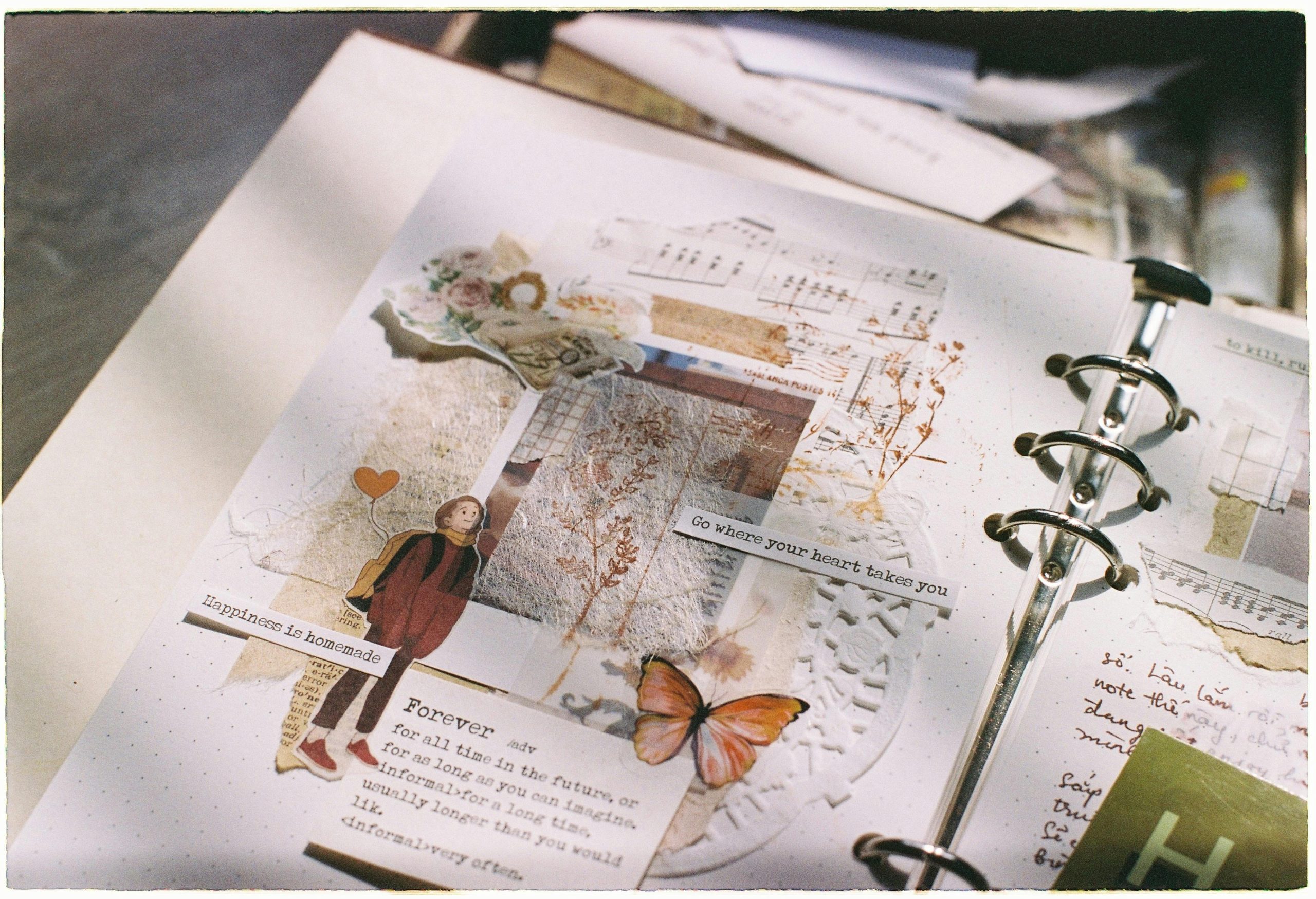
The instinct is the same instinct
What I do for clients, in a real sense, is scrapbooking at the front end of a trip: shaping the story, choosing the anchors, protecting the negative space, building each itinerary by hand around one specific family’s WHY.
The standard is simple: the trip has to be worthy of its own scrapbook. Not because every client will make one (most won’t). But a trip worthy of a scrapbook is one with a story, with anchors, with negative space, with details specific enough they couldn’t belong to anyone else’s vacation. Those are the trips I plan.
If you’ve ever made a scrapbook page you were proud of, you already know what I do.
If your next trip is the one you’ve been talking about for years, and you’d like it designed with the same care you’d give a layout, that’s the conversation I’d love to have.
Book a free consultation today.