Budapest with Teens: 5 Reasons to Add It To Your Trip
We’d heard great things about Budapest before we ever booked the trip, enough that I went in with a quiet feeling we’d probably like it. What I wasn’t prepared for was how much we’d love it, or how well Budapest with teens actually works.
I came home half-joking that Budapest should become my new travel niche, the European city I lead every conversation with. It’s not, at least not yet, but I mean it more sincerely than the joke lets on. Budapest was cool, clean, and somehow managed to feel genuinely grand at every turn, and it kept reinforcing that impression again and again, one neighborhood, one view, one meal at a time.
Vienna was an art, museum, history, and café lover’s dream, the kind of city built for people who want to slow down and soak in culture. Bratislava was quaint, a perfect, low-key stop to break up the time between the two bigger cities. Budapest, I figured, would be a solid choice to end the trip on, a good closing stop but nothing more. I didn’t expect it to be the grand finale.
But boy, was it.
Budapest turned out to be our favorite stop of the whole trip, and a month later, I’m still thinking about why.
It’s not one big thing. It’s that Budapest keeps handing teenagers reasons to look up from their phones, and it does it without ever feeling like it’s trying. If you’re weighing a family trip to Central Europe and wondering whether Budapest earns its place on the itinerary, here’s what changed my mind.
1. It’s a City Built for Exploring, Not Just Sightseeing
Budapest is really two cities split down the middle by the Danube: hilly, historic Buda on one side, and flat, energetic Pest on the other. Most first-time visitors expect to see a city like this from a bus window, shuffled between stops on a tour bus schedule. Skip that entirely.
We got around almost entirely on foot and by public transport, and Budapest might have some of the best, easiest public transit of any city we’ve visited. The trams and buses are simple to navigate, even if you don’t speak a word of Hungarian. They run frequently and get you exactly where you need to go without the wait, crowds, or rigidity of a tour bus. Just make sure you buy a ticket and validate it—the violation fines are high and they do have monitors checking…and the monitors are often dressed in street clothes and wearing a purse or backpack, making you believe they are fellow riders.
A quick walk across the Chain Bridge, river below and stunning views ahead, will still give you a great sense of the city’s layout, and it’s worth doing at least once, ideally once each direction. But the real win is realizing you don’t need a guided coach to see Budapest well. You need a transit card, a sense of adventure, and a decent pair of shoes.
If you’re planning a Budapest itinerary for a family, build the days around trams and walking rather than a tour bus. It’s a small choice that changes how the whole city lands, and it gives teens a sense of independence that a tour bus seat never will.
The same goes for Gellért Hill. There’s a shuttle and a bus route up to the Citadella, but we hiked it, and it’s exactly the kind of physical, slightly winded, worth-it effort that teenagers respond to more than they’ll admit. The trail winds up through trees and switchbacks before opening onto one of the best panoramic views in the city, the Danube, both castle hills, and Parliament laid out below all at once. It’s maybe 30 to 45 minutes of climbing depending on pace, and it earns the view in a way the shuttle simply doesn’t.
2. The History Comes Alive Through the Right Guide, Not Just the Right Sites
We booked a walking tour of the Pest side, partly for the history and partly because walking a city is always the better way to learn it. While we were waiting to start, our guide mentioned there were dedicated walking tours of the Jewish Quarter too, a separate experience entirely from the one we’d booked.
My teen, who genuinely loves learning even when she’d never phrase it that way, turned to me and asked, “Can we do both? Or if we can only do one, can we switch to that one instead?” We hadn’t been to the Jewish Quarter yet. We aren’t Jewish ourselves. But after only 24 hours in the city, she was hungry for as much history as she could get, and the idea of a guide walking her through a neighborhood with that much weight and meaning was more appealing to her than sticking with our original plan.
We ended up keeping our original tour, and the following day we made our own way through the Jewish Quarter and hit the Ruin Bars in the same afternoon. It was moving, beautiful, and absolutely a must-see stop in Budapest. But I’ll admit, having a guide for that walk would have made it even more meaningful, and it’s the one adjustment I’d make if we went back.
This is the part of traveling with teens that’s easy to underestimate: when a teenager is asking to add more history to the day, not less, you’ve found a city that’s doing something right.
3. The Thermal Baths Are Genuinely Different
Széchenyi Thermal Bath is one of those experiences that doesn’t quite translate until you’re standing in it. It’s an enormous, ornate, canary-yellow bathing complex with indoor and outdoor pools, where locals play chess waist-deep in steaming water and the whole scene feels like it’s operating on its own timeline, separate from the rest of the trip.
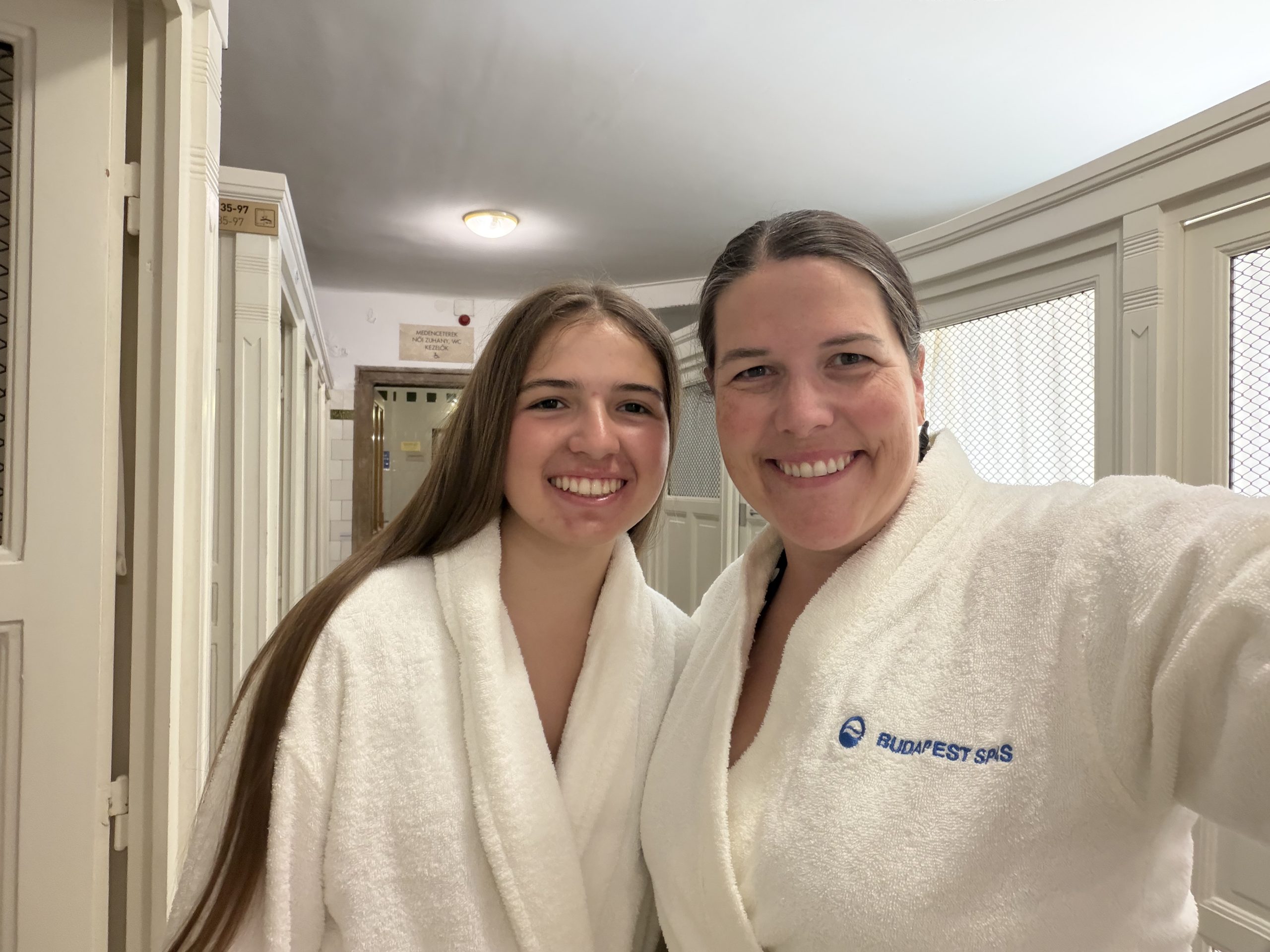
We upgraded to the Dayspalm package (Széchenyi’s rooftop Palm House relaxation area) for our visit, and it was worth every bit of the extra cost. It came with a dedicated, locked changing room instead of the standard lockers, access to a private lounge, flip-flops and a robe for the day, and even a few mocktails and snacks included. It turned what could have been a slightly chaotic day at a massive public bath into something genuinely relaxing, which matters more than you’d think when you’re traveling with kids and everyone just wants a place to decompress for a few hours.
It’s not a spa day, at least not the kind that conjures up quiet robes and cucumber water on its own. But with the right upgrade, it can absolutely feel like one, layered on top of a genuine cultural experience. Teens who roll their eyes at another museum stop will not roll their eyes at this. Gellért Baths offers a slightly more polished, Art Nouveau alternative if you’d rather split your visit between the two.
Pack swimsuits and a little extra time in the schedule. This is not a stop to rush.
4. It’s One of the Most Photogenic Cities in Europe
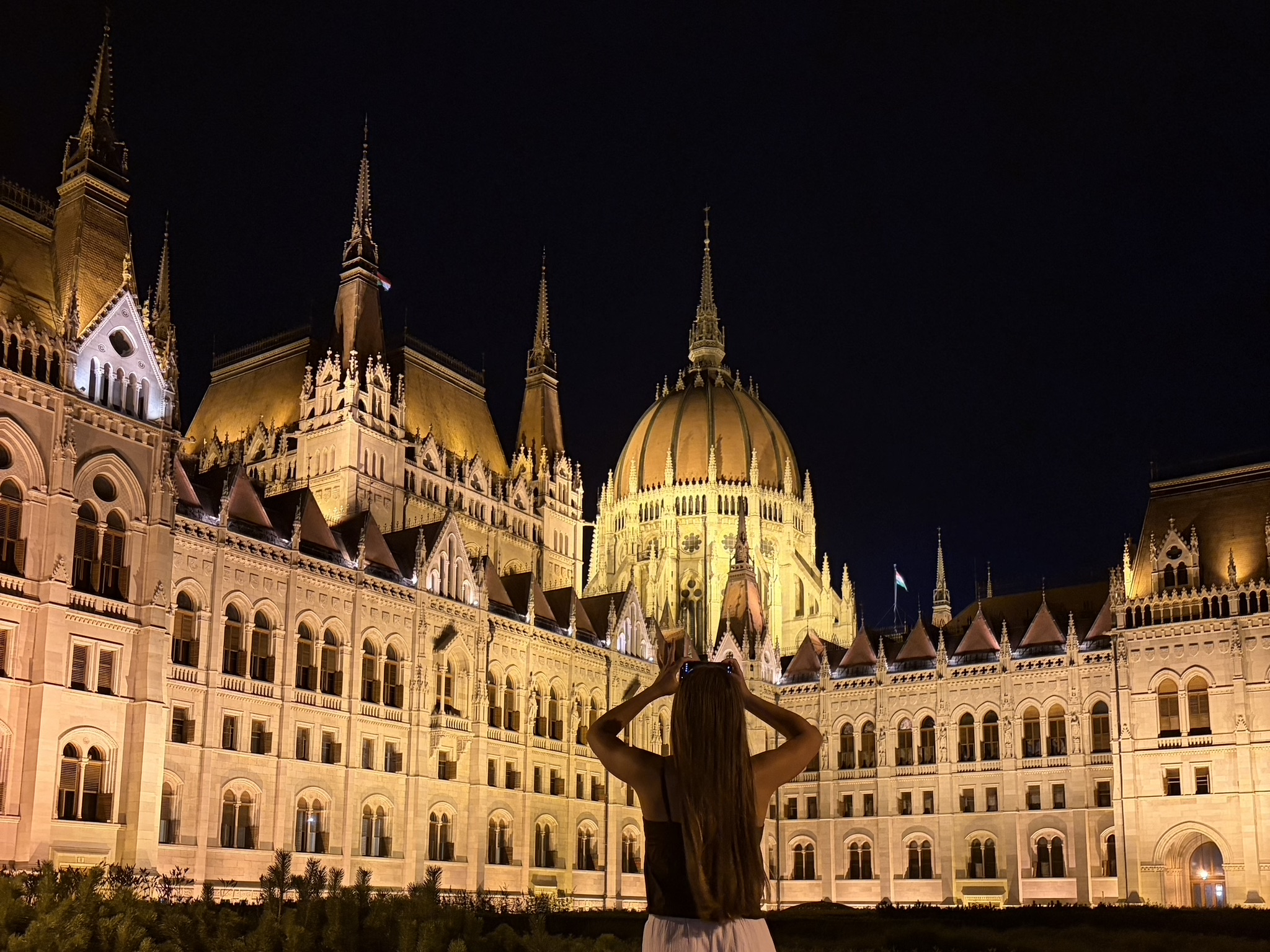
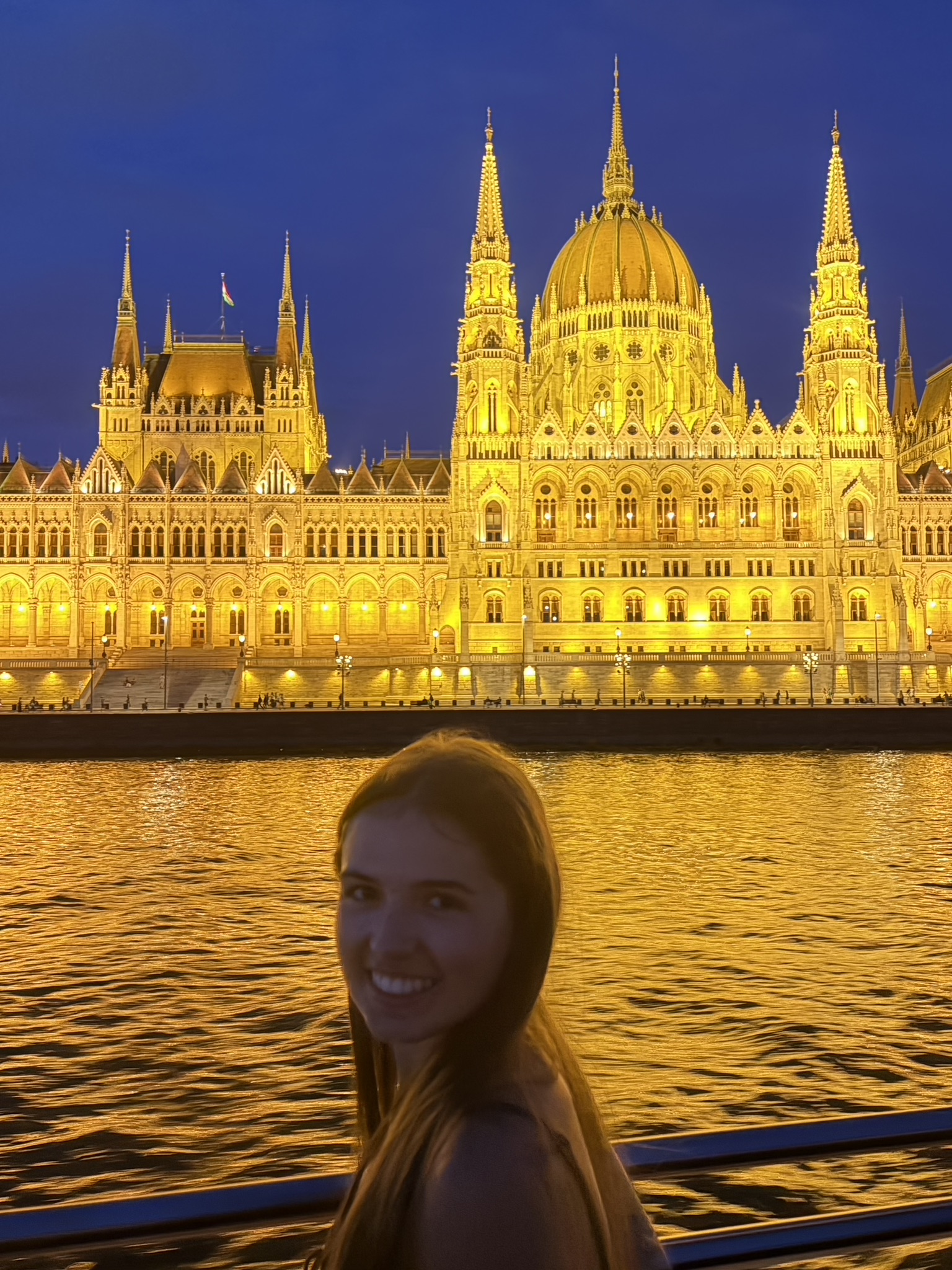
The Hungarian Parliament building lit up at night, reflected in the Danube, is the kind of shot that stops a scroll. It’s the “Instagram worthy” photo that your teen is yearning to capture! So is the view from Fisherman’s Bastion at golden hour, when the light hits the white stone and the whole city turns gold for about twenty minutes.
But the view that stayed with me most came from the water. We timed our Danube river cruise to start right at sunset, so by the time we made our way toward Parliament, it had lit up completely, glowing gold against a darkening sky. It was, without exaggeration, stunning. My teen declared the river cruise a highlight of the entire trip, without hesitation or qualifiers. It’s a must-do, and honestly reason enough on its own to build an evening around.
That’s part of what makes Budapest so easy to plan around, whether you’re building a land-based itinerary or looking at it as a river cruise stop. The city works beautifully both ways. On land, you get the walkability and the hillside views. By river, you get a perspective on the same landmarks that you simply can’t get any other way. If a Danube river cruise is on your radar, Budapest is the kind of port that earns an extra night rather than a quick afternoon stop, so be sure to start or end your river cruise itinerary there.
For a teenager into photography, or simply taking a good photo for their feed, Budapest provides the material without requiring real effort. We didn’t plan a single outing around getting a photo. The city just kept handing them to us, one bridge, one rooftop, one sunset at a time.
If your teen leans creative, whether that’s photography, art, or just an eye for a good shot, Budapest rewards that instinct at almost every turn.
5. The Food Scene Rewards Curiosity
Budapest’s Jewish Quarter is home to the city’s famous ruin bars, courtyards and abandoned buildings reimagined into eclectic, mismatched gathering spaces filled with secondhand furniture and string lights. By day, that same district is full of casual food stalls, small bakeries, and coffee shops that make trying something new feel low-stakes rather than intimidating.
The Great Market Hall is the other stop worth building real time around. It’s Budapest’s largest and oldest indoor market, a soaring iron-and-glass building with a tiled roof, stalls of paprika in every shade of red, embroidered linens, and an upstairs food court where you can grab langos or chimney cake and just watch the market move around you. It’s loud, colorful, and completely unstaged, which is exactly what makes it work for teens. Nobody is performing for tourists. This is just how the city shops.
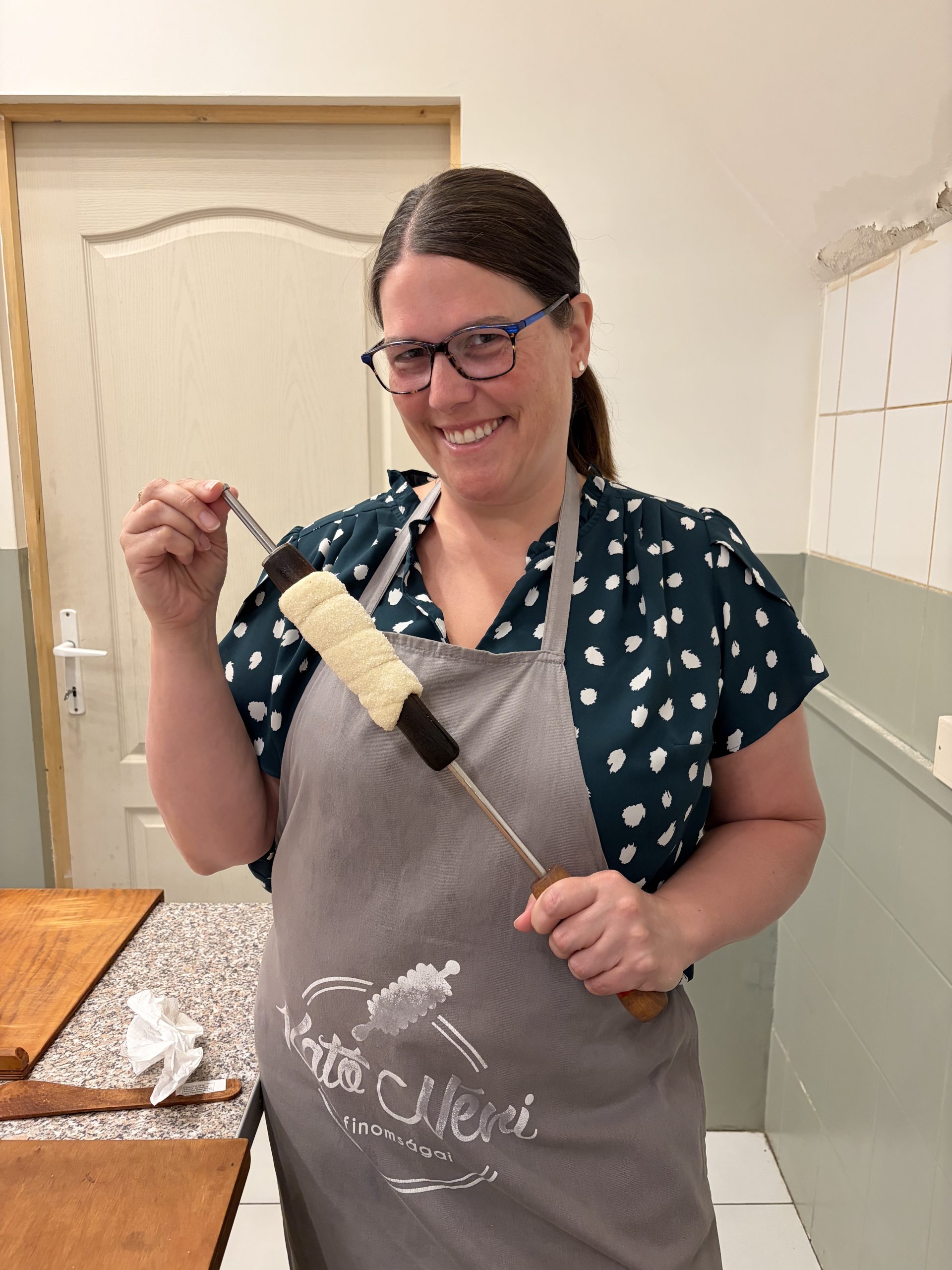
But the food experience that stole the show was our chimney cake making class, and it’s an absolute must-do. It wasn’t long, around 90 minutes or so, but it packed in more genuine fun than I expected from a baking class. We learned why they’re actually called chimney cakes: the dough wraps around a cylindrical spit, bakes until golden, and when you pull it out, steam rises up through the center and out the top, looking exactly like smoke curling out of a chimney. It’s a small detail, but it’s the kind of thing that makes a food memory stick.
We each got several tries to perfect our own, and “perfect” mostly meant figuring out whether ours would actually stay standing once it came out of the oven, steam and all, or topple over in failure. Ours had… mixed results. But every single attempt was delicious, and the whole process had us laughing the entire time.
Add a langos, fried dough topped with sour cream and cheese and equally worth the indulgence, and you’ve got a food memory that sticks long after the trip ends. It’s a city that rewards a little curiosity at the table, which is exactly the instinct I want to encourage in my own children when we travel.
Budapest surprised me. It didn’t cater to a teenager. It just happened to be built in a way that pulled her in anyway, through walkability, real history, a little novelty, and food worth talking about later.
If Central Europe is on your radar for your own family, let’s talk about how to build a trip around what your teens actually respond to, not just the stops everyone tells you to make.
Kristy is a seasoned global explorer who’s traveled to over 20 countries, blending two decades of adventure with a passion for meaningful, well-crafted journeys. She now helps others travel with intention – connecting natural beauty, local flavor, and authentic cultural experiences.
Sawyer is a high-school student who’s traveled with her family to over 10 countries across four continents. While she loves time at the beach, her favorite vacations go beyond the beach and involve exploration, learning about new cultures, and indulging in local eats.