
How to Plan a Multi-Island Greece Trip (Without Losing Two Days to Ferries)
A WonderCrafted Travel planning guide
“We want to see Athens, Santorini or Mykonos, Crete, Corfu, and Rhodes.”
I hear a version of this on almost every Greece inquiry, and I understand the instinct completely. Every island, and every island group, has its own personality, and it feels like leaving one off the list means missing something. But here’s what I’ve learned planning Greek Island trips: the number of islands you visit matters far less than how well they connect, and more importantly, whether they even belong on the same trip. Get the region and the logistics right, and three stops can feel like a rich, unhurried trip. Get them wrong, and those same three stops, pulled from opposite ends of the country, can feel like a bad episode of The Amazing Race.
Here’s how to actually plan it.
Why fewer islands almost always wins
Every island you add to an itinerary costs you more than transit time. It costs you the transfers and the settling-in time at both ends. The first day on any island is spent finding your bearings, and the last day is spent packing and getting to the port or airport. Add up four or five islands, and you can lose the better part of a week just to transitions, before you’ve even accounted for weather delays.
For a first trip to Greece, I almost always recommend Athens plus one or two islands, chosen for contrast rather than volume: Athens for the history and the easy starting and ending flight logistics, one island for that iconic view-and-sunset experience, and one that adds something different entirely, whether that’s culture, hiking, or simply a slower pace. That contrast is what makes a Greece trip feel complete, not the island count. For travelers with a short trip who still want that second stop, the Saronic Islands, Hydra, Spetses, Aegina, and Poros, just an hour or two from Piraeus by ferry, are often the easiest way to get it without adding real travel time.
Greece is several island regions, not one trip
This is the single most common misconception I run into: treating “Greece” as one contiguous region where you can casually string together whatever islands sound appealing. In reality, the islands fall into distinct groups spread across two different seas, and not all of them talk to each other by ferry.
The five regions I plan most often:
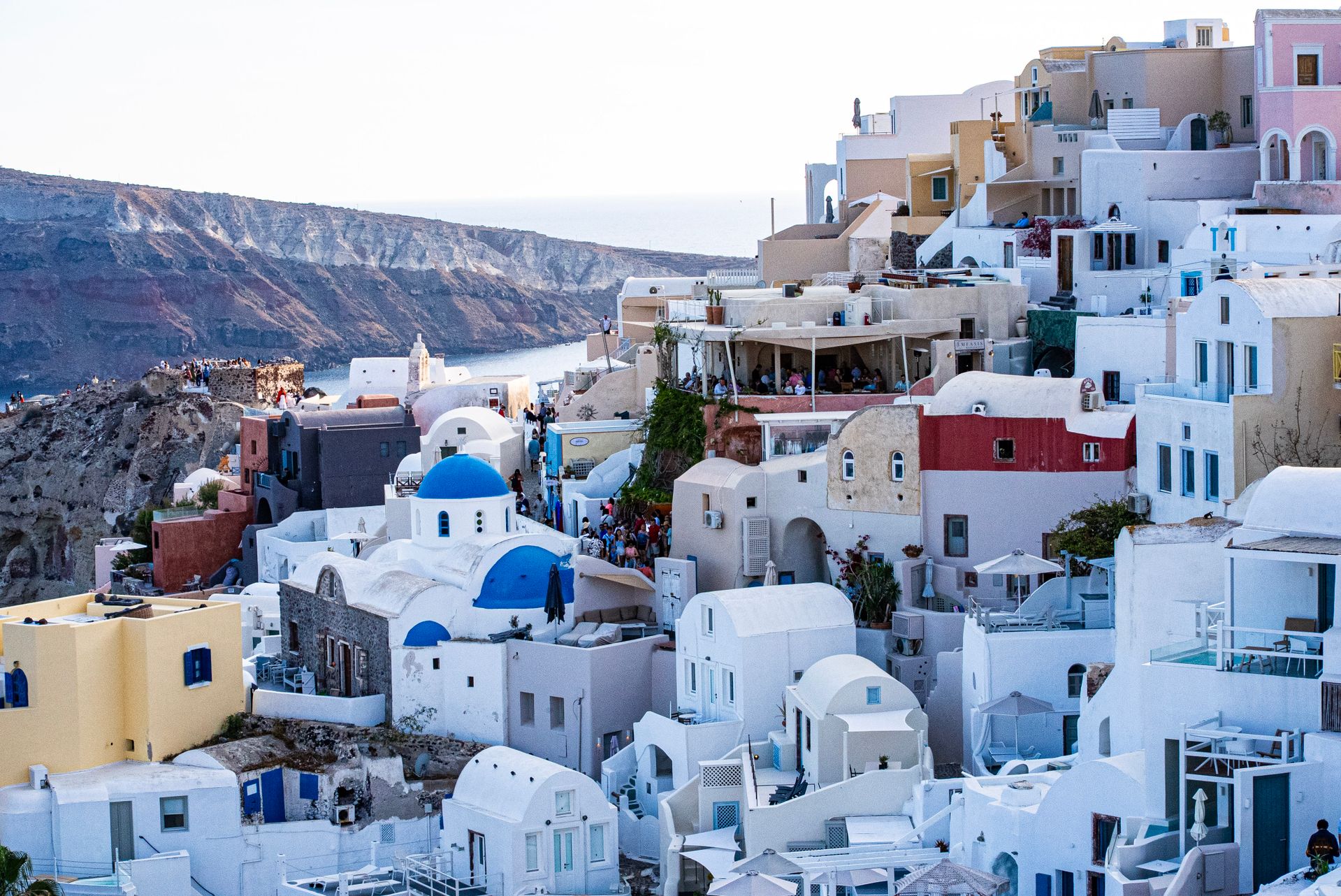
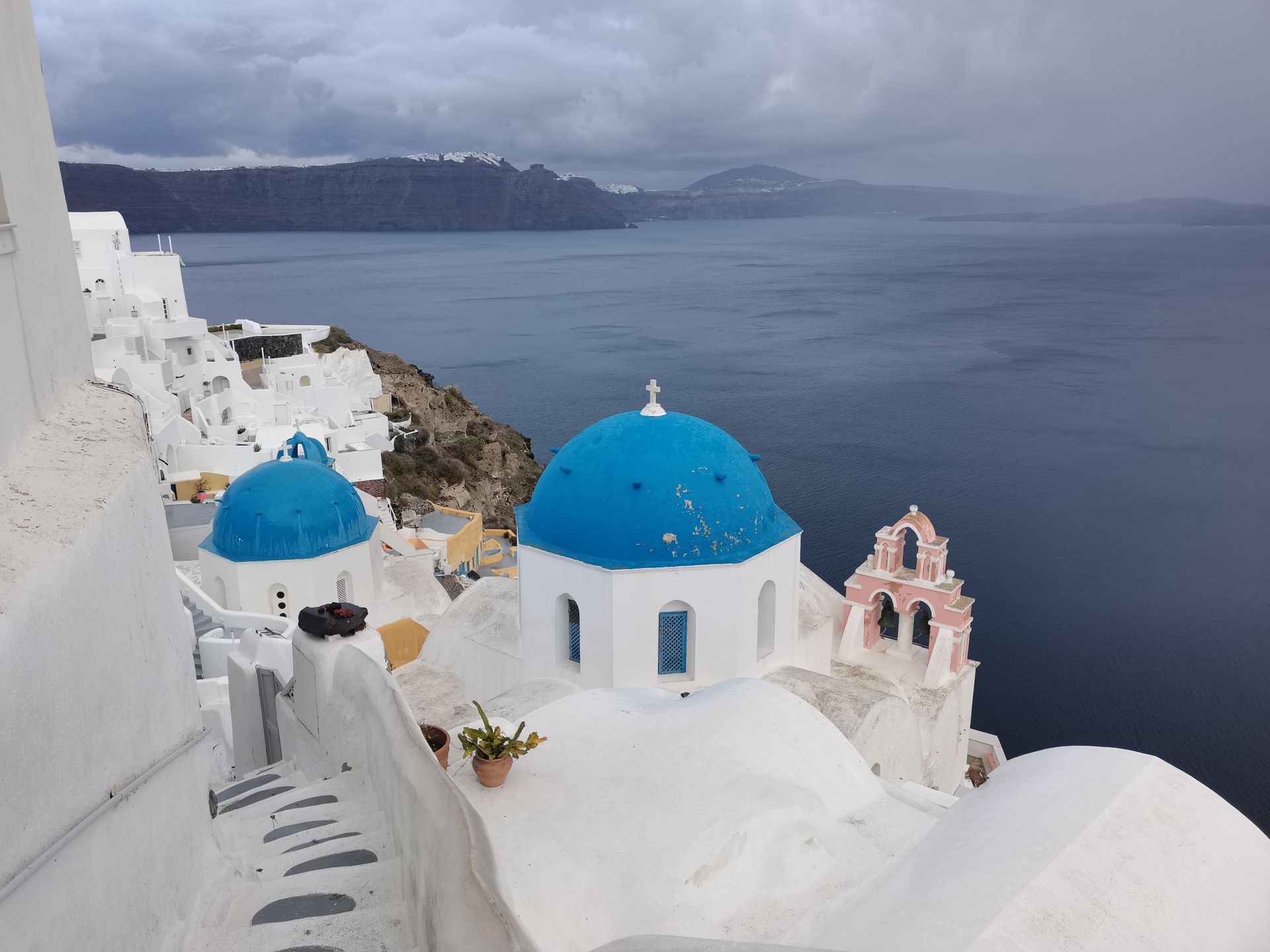
The Cyclades: Santorini, Mykonos, Naxos, Paros
This is the Greece of postcards: whitewashed villages, blue domes, caldera sunsets. It sits in the Aegean Sea, is well-connected by frequent ferries, and is where most first-time visitors’ imaginations start.
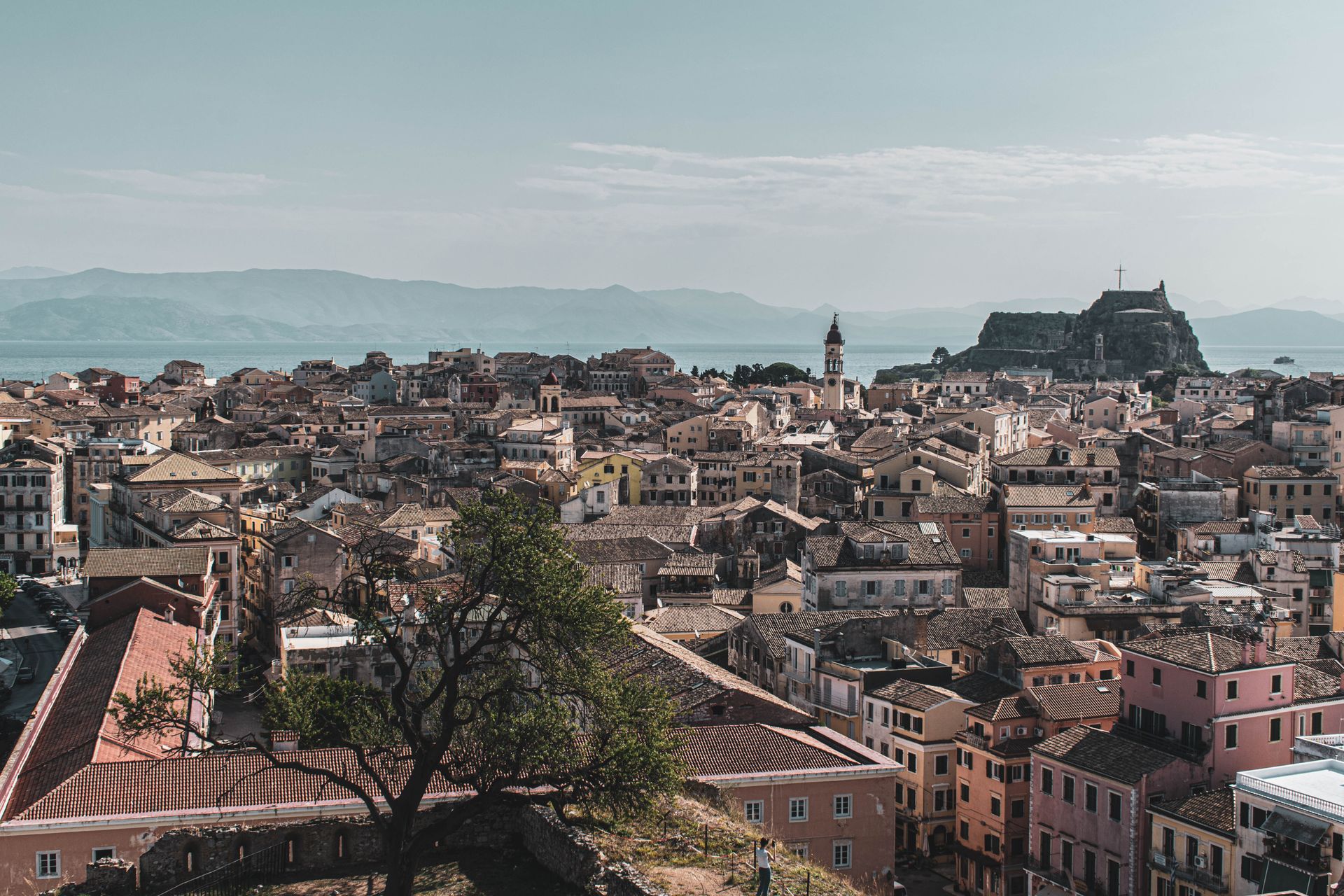
The Ionian Islands: Corfu
A completely different Greece: green, lush, more Venetian than Cycladic in its architecture, calmer water, and, genuinely useful to know, largely protected from the strong summer winds that shape ferry schedules further east. Corfu itself is a wonderful hub, though a much smaller hub than people tend to expect.
The Dodecanese: Rhodes
Closer to Turkey than to Athens, with a completely different historical layer: medieval Crusader architecture, Ottoman influence, Rhodes Town’s Old Town walls. Rhodes is also a genuine hub, with strong, frequent connections to a cluster of smaller islands around it.
Crete: Greece’s largest island
Crete is less a hub with neighbors and more a complete destination on its own: mountains, gorges, Minoan ruins at Knossos, and a food and wine culture distinct from the rest of Greece. It isn’t really part of the Cyclades or the Dodecanese, though ferries connect it to both in season. Most of my clients treat it as a standalone trip rather than a stop to pair with other islands.
The Saronic Islands: Hydra, Spetses, Aegina, Poros
The closest island escape to Athens, and the region I turn to most often when a client wants an island add-on without spending real travel days to get it. These sit in the Saronic Gulf, a short hop from Piraeus by ferry, from about an hour to Poros or Aegina up to roughly two and a half hours to Spetses. Hydra is the standout: no cars, just donkeys and cobblestone lanes. Aegina works well as a half-day or full-day trip. Spetses trades a bit of distance for a quieter, more residential feel.
Here’s the part that surprises people: Corfu and Rhodes don’t connect to each other, or to the Cyclades, by ferry in any practical way. Moving between these regions generally means a flight, usually routed through Athens. So the real first planning decision isn’t “which islands.” It’s what you’re hoping to achieve, how you want to feel, what matters most to you, and what your travel style actually is. That’s what leads to the right region, because that choice shapes everything else about the trip.
Why matching the region to the traveler matters more than the itinerary
This is where I think a lot of well-intentioned trip planning goes wrong: people pick islands off a list of the most photographed spots without asking whether that island’s personality actually matches how they like to travel.
The Cyclades reward travelers who want the iconic view
The golden-hour photo, a bit of nightlife energy – it’s for travelers who don’t mind steep steps and crowds in peak season. It’s a fantastic fit for a couple celebrating something, or a group that wants that unmistakably-Greece backdrop. And within the Cyclades, there are variables that make one island more suitable for one traveler over another.
The Ionian Islands
With Corfu as the anchor, they tend to suit a slower, greener, more laid-back trip: families with younger kids, travelers managing mobility or pacing considerations, or anyone who wants beach time and old-town wandering without the intensity of Cyclades tourism. I’ve recently planned a Corfu trip built specifically around a gentler pace, and the region itself did a lot of that work before we ever got to the day-by-day itinerary.
Rhodes and the Dodecanese fit travelers who favor history
Crusader fortresses, cobblestone medieval streets, layered empires, paired with easy access to a handful of small, quiet islands for contrast make history the main character. It’s also a strong choice for anyone who wants one comfortable home-base island with short day-trip options, rather than packing and unpacking every couple of days.
Crete suits travelers who’d rather have one grounded but varied location
Rather than island hop, you’ll find beaches, mountain villages, archaeological sites, and real culinary depth, all without a single inter-island ferry once you’ve landed. It’s a strong fit for anyone who finds packing and unpacking every few days more tiring than exciting, or who wants a slower single-destination trip with real range built in.
The Saronic Islands suit travelers who want the island feeling without committing days to travel
The Saronic Islands enable a day trip from Athens, or a one- or two-night add-on for a couple who wants a quieter, slower contrast to the city without ever touching a domestic flight. It’s also a strong fit for anyone whose overall trip is short, but who still wants that island stop on the itinerary.
This is honestly the part of the job that has the least to do with logistics and the most to do with listening: understanding what a traveler actually wants their days to feel like, then choosing the region and the pairing that delivers that, instead of just checking iconic islands off a list. Get the region right for the traveler, and the itinerary underneath it almost plans itself. That matching is where an advisor earns their keep long before a single ticket, ferry or flight, gets booked.
The logistics people don’t budget for
Once you’ve picked a region, how you actually move between stops still matters, and it varies meaningfully from one region to the next.
Within a single region, ferries genuinely differ in speed and reliability depending on the route, the vessel, and the season. A high-speed catamaran and a large conventional ferry can cover the same stretch of water in very different amounts of time. Schedules run at full strength in high season and thin out considerably in the off months. Some routes also sail out of a specific port for a reason worth knowing: Mykonos, for instance, is often reached from Rafina rather than Piraeus, since Rafina sits closer to the Athens airport. None of this is complicated once you know it, but it’s exactly the kind of detail that turns into a lost afternoon when you don’t.
Between regions, ferries mostly aren’t an option at all. Corfu and Rhodes don’t connect to each other or to the Cyclades by boat in any practical way, so that leg is a flight almost every time.
(Ferry schedules and operators shift season to season, so I always confirm exact routes and timing when I’m building a client’s actual itinerary rather than working off general patterns like these.)
Why I often route by air between Athens and the islands
Here’s something that surprises a lot of first-time Greece travelers: I book almost as many domestic flights as I do ferries, and it’s not because the ferry isn’t available.
Athens sits at the center of almost every Greek island itinerary. You’ll fly internationally into Athens no matter which islands you plan to visit. From there, most of the islands I build trips around (Santorini, Mykonos, Corfu, Rhodes, Crete) have their own small airports with frequent domestic service back to Athens. A flight between Athens and most of these islands is short. The ferry covering that same distance can run anywhere from a few hours to the better part of a day, depending on the route and the vessel.
For a lot of my clients, that trade is an easy call. If you have ten or twelve days total for the trip, spending a full day of it on a boat is a real cost, not just a charming detail. It’s a day you don’t get back on the island you actually planned the trip around. Flights also tend to hold up better against the meltemi than the smaller high-speed ferries do. When a flight is disrupted, you’re usually looking at a same-day rebooking onto the next departure, not a full missed day waiting on the next sailing.
The Athens payoff
That’s part of why I lean on Athens itself as a real stop in the itinerary rather than just an airport you pass through: a night or two in Athens for the history, paired with short flights out to and back from the islands, often makes for a smoother, more relaxed trip than a chain of long ferry crossings strung together.
None of this means the ferry is the wrong call. For travelers with more time, or for the short, frequent hops within a single region, like Naxos to Paros or Rhodes to Symi, the ferry is often still the better experience, and part of what makes island-hopping actually feel like island-hopping. It’s a genuine judgment call I make with each client: how much time they have, how many stops they want, and whether the crossing itself is part of the trip they’re picturing or just the thing standing between them and it.
Pairings that actually work
Santorini + Naxos
The classic view-and-sunset island, paired with somewhere slower, greener, and far less crowded. A quick high-speed ferry link between them makes this an easy, low-stress connection.
Mykonos + Paros
Two islands with a genuinely short ferry hop between them, so you get the energy of Mykonos and the relaxed, artsy pace of Paros without sacrificing a travel day to get there.
Corfu + Paxos/Antipaxos
A short, reliable high-speed ferry pairs Corfu’s own old town and beaches with a lush, quiet day, or overnight, on Paxos, plus the sea caves and turquoise water Antipaxos is known for. This is the pairing I recommend most for a slower-paced Ionian trip.
Rhodes + Symi
Another short, dependable ferry hop, pairing Rhodes’ medieval Old Town with Symi’s candy-colored neoclassical harbor. Easy as a day trip or a one-night add-on. Halki is a quieter, less-visited alternative for travelers who want to go even further off the beaten path.
Crete, on its own
Crete is large enough, and different enough in character, with its own mountains, gorges, and Minoan history, that I usually recommend treating it as its own trip rather than bolting it onto a Cyclades itinerary. Most clients enjoy Crete more when they give it a dedicated, unhurried visit rather than splitting time with another island.
Crete + Santorini
The exception worth knowing: Crete and Santorini have a genuinely good direct ferry connection, a high-speed catamaran running roughly 1.5 to 2.5 hours depending on the operator, with two or three daily departures from April through early November. For travelers with more time on the trip, ten days or more, pairing a few dedicated days in Crete with a few days in Santorini works well, and the crossing itself is short enough that it doesn’t eat into the trip the way people assume. I still default clients toward Crete on its own when time is limited, but this pairing earns its place when it isn’t.
Athens + a Saronic Island
For travelers with limited time who still want an island stop, pairing Athens with Hydra, Spetses, Aegina, or Poros is the easiest add-on in the country. It’s a short, frequent ferry from Piraeus, works well as a single night away or even a long day trip, and doesn’t require a domestic flight or a multi-hour ferry crossing at all.
Combos to be cautious with
Anything that strings together islands from different regions, Santorini and Corfu, say, or Rhodes and Mykonos, assuming a ferry will connect them. It won’t. You’re looking at a flight, usually through Athens. That can absolutely work as a longer, two-region trip, but clients need to plan for exactly that from the start, not discover it midway through booking.
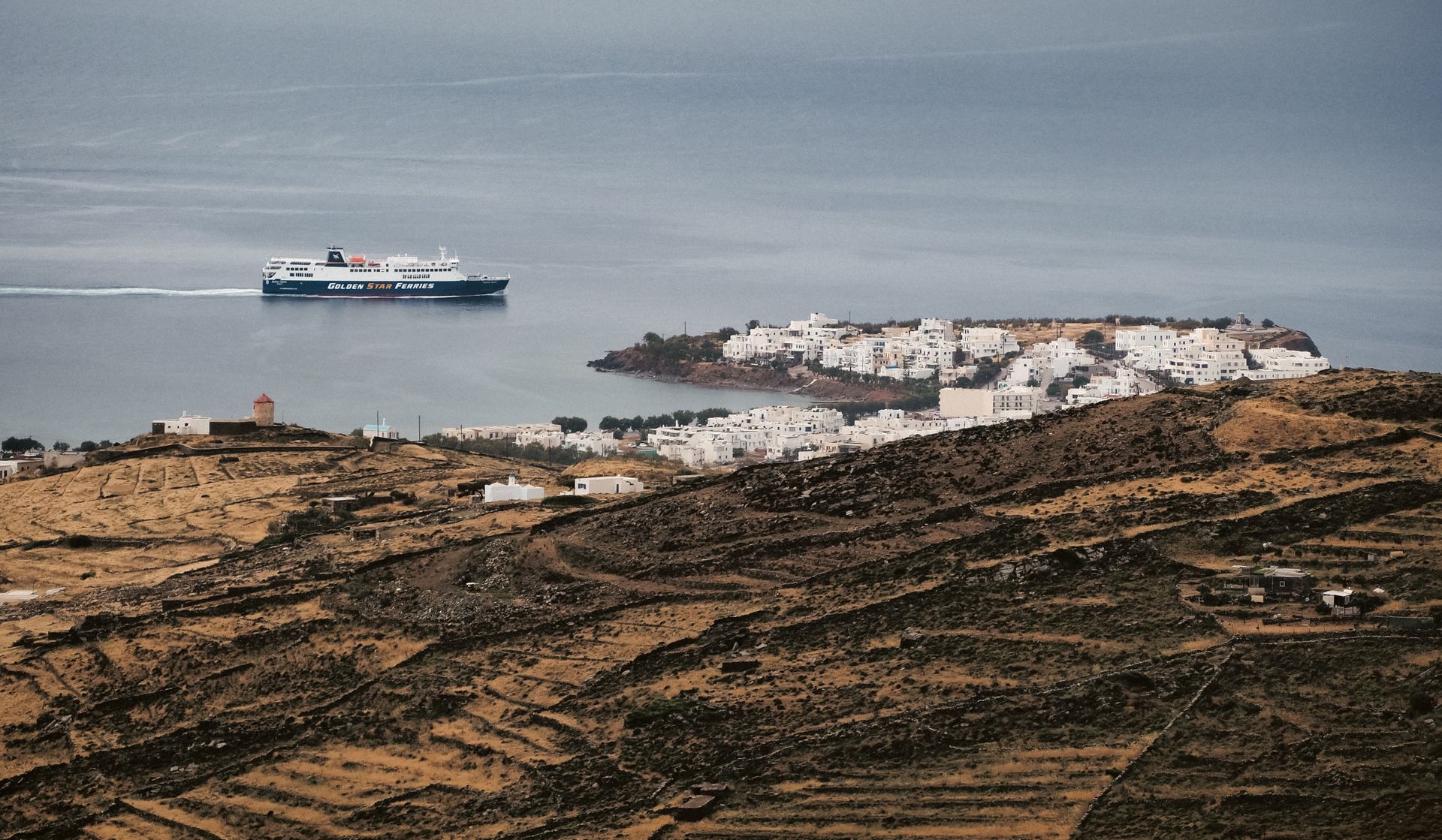
Weather cancellations: the variable nobody puts on the itinerary
This is the piece that catches even well-planned trips off guard: wind cancels Greek ferries, and it happens more often than most first-time visitors expect.
From June through September, the Aegean gets the meltemi: strong, dry northerly winds that peak in July and August and typically blow hardest from mid-morning to sunset. At their strongest, meltemi winds can reach 7–8 on the Beaufort scale, and when they do, the Greek port authorities can suspend sailings outright, sometimes for a few hours, sometimes for a day or two at a stretch. Wind pulls high-speed catamarans first, since they handle open water far worse in high wind than the larger conventional ferries do. It may cancel a route for a SeaJets-style catamaran while a Blue Star conventional ferry still runs it the same day.
One more reason region matters here: this risk isn’t evenly distributed. The meltemi is an Aegean phenomenon. It’s the Cyclades and the Dodecanese that feel it, while the mountains of mainland Greece largely shield the Ionian Islands, including Corfu. A Corfu-based trip carries meaningfully less wind-cancellation risk in peak summer than a Cyclades- or Rhodes-region trip does, though the Ionian brings its own trade-off, namely more heat and humidity without those winds to cut through it.
What this means practically:
- Build a buffer day before anything you truly can’t miss: a flight home, a milestone celebration, a hard checkout. On your transit days, allow for exploration and don’t plan critical experiences on these days. Also, don’t schedule your last inter-island connection for the same day as your international flight.
- In the Cyclades and Dodecanese, plan on conventional ferries over high-speed ones for any July or August booking. The actual forecast isn’t knowable when you’re booking months out, so the safer move is building the more weather-resilient option into the itinerary from the start, especially for a leg you can’t afford to lose a day on.
- Where a flight is a real alternative to the ferry, such as between Athens and most Cyclades or Dodecanese islands, I often build peak-summer itineraries around that flight instead. It’s more weather-resilient than a high-speed ferry, and clients decide it at planning time, not as a same-day swap. (This doesn’t apply to Corfu and the rest of the Ionian, which was never reachable from Athens by ferry in the first place. Flying is simply how you get there, any time of year.)
- Pack a change of clothes and essentials in your carry-on on any inter-island travel day, rather than in checked or stowed luggage. If a sailing gets pushed to the next morning, you’re not stuck in the clothes you traveled in.
- Hold the itinerary loosely in your head, even if you’ve fixed it on paper. The people who handle a cancelled sailing gracefully are the ones who went in knowing it’s a real possibility, not a freak exception.
Time of Year Considerations
Late spring (May–early June) and early fall (September–early October) are the sweet spot for avoiding this altogether in the Cyclades and Dodecanese: schedules run at full frequency, the Aegean is calmer than during peak meltemi season, and you also skip the peak-August crowds and heat. It’s not a coincidence that this is when I steer most Cyclades and Dodecanese clients toward booking.
A few more logistics worth planning around
Beyond the ferry math and the weather, a handful of smaller logistics trip up first-time Greece travelers more than anything else on the itinerary.
- Domestic flight baggage limits are lower than international ones. Greek domestic carriers often cap checked luggage at 15–20 kg, well under the 23 kg most travelers expect from their international leg. Knowing this before you pack, not at the check-in counter, is the difference between a smooth transfer and an unplanned overage fee.
- Renting a car requires an International Driving Permit, not just a U.S. license. It’s a real legal requirement in Greece, travelers have to arrange it before they leave home, and it’s one of the most common things they discover only after they’ve already landed.
- Major sites now run timed entry. The Acropolis and Knossos both require a booked time slot, and the best windows, along with any skip-the-line options, go first. Clients need to lock this in well before arrival, not decide it the morning of.
- Off-season isn’t uniformly quiet. Some islands go into a near-total hibernation from November through March, with restaurants and hotels shuttered and ferry schedules stripped down. Others stay genuinely open and pleasant. Which is which changes the shape of a shoulder-season itinerary completely.
None of these situations are complicated. It’s just the kind of detail that’s invisible until it isn’t, and it’s exactly what I build into a client’s itinerary and packing guidance well before departure day.
Why I always work with a boots-on-the-ground partner in Greece
Here’s the honest truth about everything above: you can plan the smartest routing in the world, and the wind still doesn’t care about your itinerary. That’s exactly why I work alongside a trusted in-destination partner on every Greece trip I build, whatever region it’s in, including the eight-island group trip I’m currently coordinating. It’s a local team who is physically there, watching the same forecast and port authority notices I am, but with the relationships and reach to actually act on them.
When wind cancels a sailing, the difference between a stressful afternoon and a non-event usually comes down to who you know. A boots-on-the-ground partner can rebook a client on the next available crossing or flight, arrange a private transfer or speedboat when the ferry schedule won’t cooperate, or simply be a real person a traveler can reach on the ground in the same time zone, not a call center. For a solo couple, that’s peace of mind. For a group of eight or nine traveling together, it’s the difference between one family missing a connection and the whole group’s plans unraveling.
It’s also why I don’t try to plan every last detail of a multi-island Greece trip from behind a desk in Illinois. The itinerary is mine to design. The local execution, the relationships with specific captains, hoteliers, and drivers who can make a plan B happen on short notice, is what a genuine in-destination partner brings to the table. That combination is what actually protects a trip from becoming a cautionary tale.
The real takeaway
A great multi-island Greece trip isn’t the one that touches the most islands, or the most famous ones. It’s the one where the region actually matches the traveler, where the connections, by air or by sea, are so smooth you barely notice them, and where getting there becomes part of the experience instead of the thing you’re enduring to reach the next part. That takes the right region, fewer islands within it, better pairings, and a little bit of planning most people don’t think to do until they’re already booking.
Planning a Greece trip and not sure which region, let alone which islands, actually fits how you like to travel? This is exactly the kind of matching and routing I build for clients every day. Reach out to WonderCrafted Travel and let’s map out a trip where the logistics disappear into the background.
Come home different.